How to integrate technology with traditional farming
I grew up around farms that depended on weather, patience, and the kind of hard work you feel in your hands at the end of the day. Most of the farmers I know learned everything by watching their fathers and grandfathers work the land. Over time, I’ve seen something new enter those same fields—technology. It didn’t happen overnight, but slowly, screens and sensors started sitting next to spades and shovels. Now, both worlds exist together, and I’ve learned how powerful that mix can be.
When people talk about how to integrate technology with traditional farming, they often imagine machines taking over. But that’s not the story I’ve seen. The real change happens when technology supports the farmer instead of replacing them. It’s about working smarter, not losing the old ways.
Mixing old wisdom with new tools
The first step for me was understanding that technology isn’t the enemy of tradition. My uncle still reads the sky to predict rain—and surprisingly, he’s often right. But now, he checks a weather app too. If both say rain is coming, he prepares differently. That’s the kind of balance that works.
Traditional farming gives you intuition; technology gives you accuracy. When I saw how smart farming tools and sensors could measure soil moisture, I realized they’re just another set of eyes—ones that don’t get tired. Those readings help decide when to water and how much fertilizer to use. It’s like turning experience into data you can trust.
The quiet rise of modern farming techniques
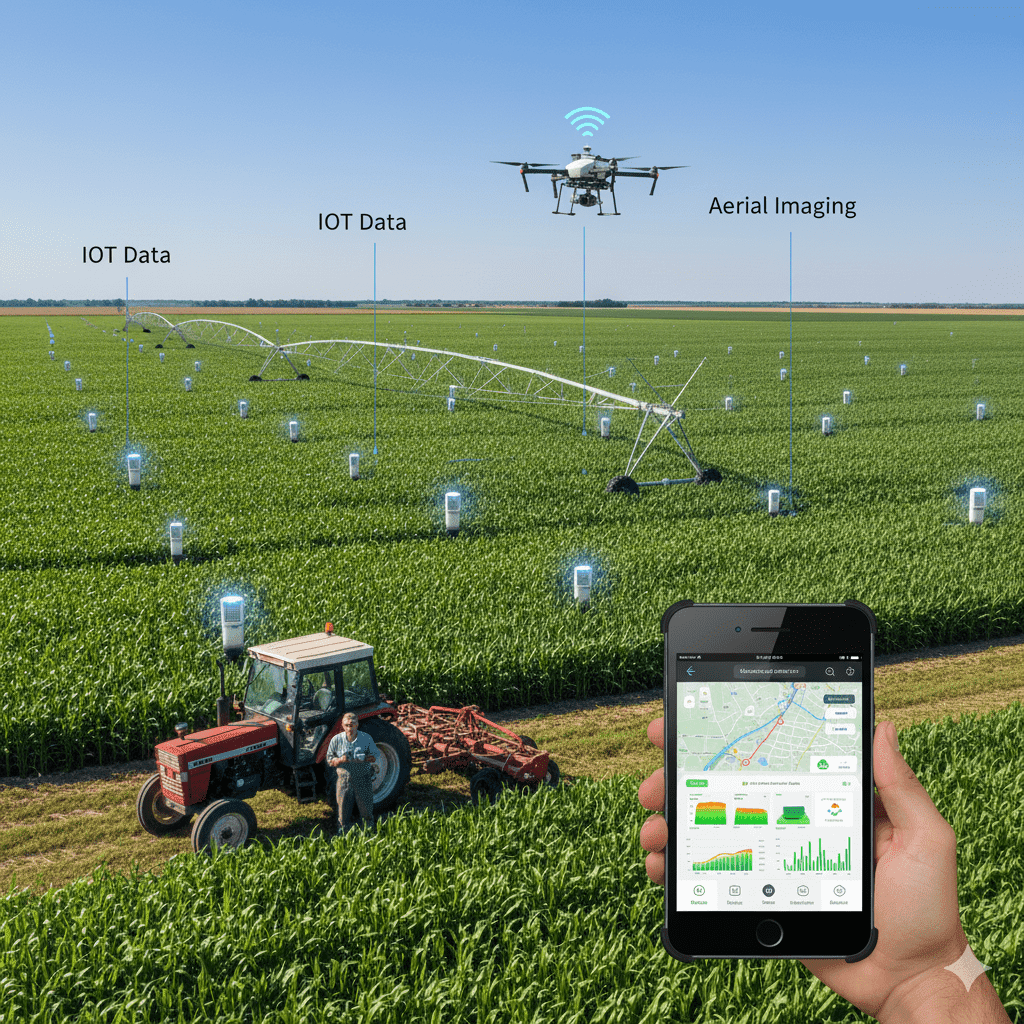
In my area, tractors used to be the biggest piece of technology on the farm. Now, farmers use GPS systems that guide those tractors in straight, even lines. That’s part of what we call precision agriculture—using exact measurements and timing to reduce waste. When I tried this approach, I noticed we used less fuel, saved fertilizer, and still got better yields.
Even small devices have changed a lot. I remember using drones for the first time—flying them over fields to see crop color patterns. Yellow spots showed stress before my eyes could. By fixing those patches early, I avoided bigger losses later. Technology doesn’t remove hard work, but it gives direction to that effort.
IoT and real-time awareness
I’ve started using devices connected through the Internet of Things (IoT). They sit quietly in the field, sending information straight to my phone. I can check soil moisture, humidity, and temperature without stepping outside. It feels strange sometimes—sitting at the breakfast table and knowing exactly how much water the crops need.
This connection helps me respond faster. If something’s off, I can act before it turns into a problem. I used to rely on guesswork, but now I rely on both instinct and data. The blend of IoT in traditional farming brings peace of mind—like knowing the land’s heartbeat even when you’re not standing on it.
Smart irrigation and water use
Water is life on any farm. I used to overwater because it felt safer, but later I learned that’s not always better. With smart irrigation systems, I found a middle ground. Sensors tell me when the soil actually needs water. The system switches on only when it’s truly necessary.
At first, it felt odd trusting a machine with something as vital as watering. But the results spoke for themselves—healthier crops, lower bills, and no more standing water in the fields. It’s like giving each plant exactly what it asks for, no more, no less.
Role of AI and data in farming
I used to think artificial intelligence was just for big companies, but it’s slowly becoming part of farming life too. Tools powered by AI now help identify diseases in plants. I once took a photo of a leaf on an app, and within seconds, it showed me the exact issue and the solution. That kind of accuracy saves time and reduces guesswork.
When I look back, I realize AI doesn’t change the soil—it changes how we understand it. The role of AI in farming isn’t about controlling nature but reading it better. Farmers used to talk about “feeling the soil”; now we can literally see its data on our screens.
Mobile apps: the new pocket notebook
In the past, we wrote everything down—rain patterns, seed types, harvest times. Today, mobile apps do that job and more. I’ve got apps that track expenses, crop health, and even pest behavior. I can pull out my phone and check how last season’s field performed.
These apps also connect us with other farmers. We share updates, prices, and even tips for modern farming techniques. It’s like having a digital farmer’s market of knowledge. Small farmers especially benefit because these tools don’t cost much but give huge advantages.
Sustainable growth through technology
The biggest impact I’ve seen from integrating tech into farming is sustainability. Using data-driven farming means using only what’s needed—water, fertilizers, and pesticides. This helps the soil stay fertile and cuts down on pollution. I’ve noticed how healthier soil leads to stronger crops season after season.
We’ve also started experimenting with solar-powered pumps and energy-efficient machinery. These not only reduce costs but also protect the environment. Sustainable agriculture through technology is no longer a fancy idea—it’s happening in real fields like mine.
Traditional vs. modern: not a fight, but a friendship
People often compare modern vs. traditional farming as if one must win. But when you live it daily, you realize both are better together. Traditional methods teach patience and respect for nature. Modern tools bring precision and speed. When I plant seeds, I still do it the old way—by hand. But the moment they grow, I rely on tech to guide irrigation, track nutrients, and plan harvests.
That mix brings stability. It keeps farming human while still making it efficient. I don’t see it as replacing tradition. I see it as protecting it for the future.
Looking ahead
Farming has always been about change—seasons shift, soil changes, and tools evolve. What I’ve learned from integrating technology is that progress doesn’t erase the past; it builds on it. My father used to say, “The land remembers who listens.” Now, I think the land also appreciates those who measure.
The future of farming will rely on farmers who combine knowledge with curiosity. Drones, sensors, and apps may sound modern, but at their core, they’re helping us do what farmers have always done—grow with care.
If we can blend tradition with technology wisely, we’ll not only feed the next generation but also teach them that the smartest farms are still the ones closest to the earth.