
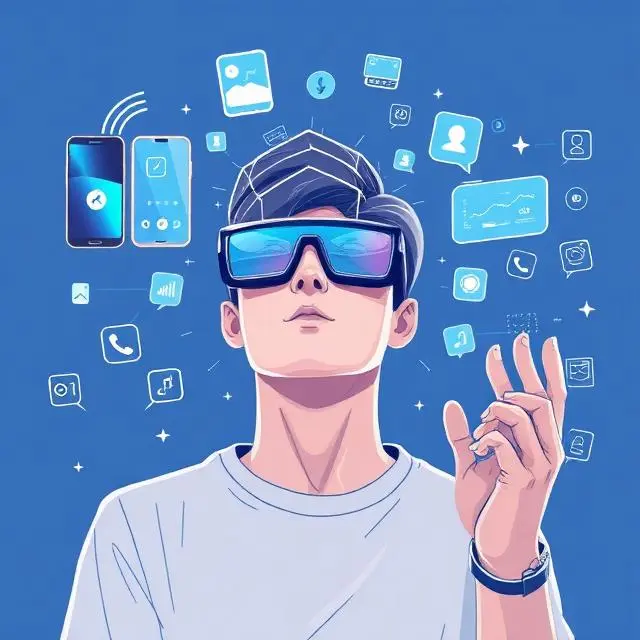
The Device That Changed Everything
Smartphones walked into our lives around 2007 and never left. They replaced cameras, alarm clocks, maps, dictionaries, and even bank visits. A single device sitting in your pocket became your connection to almost everything that matters—your work, your family, your money, and your entertainment.
But here is something interesting. The same companies that built the smartphone era are now quietly working on what comes after it. Not an upgrade. Not a thinner version with a better camera. Something fundamentally different.
The next chapter of personal technology is already being written. And if the people building it are right, the smartphone in your hand today might feel as outdated as a payphone does now—sooner than most of us expect.
Why Smartphones May Not Last Forever
Smartphones are remarkable. But they are also frustrating in ways we have simply accepted because there was no better option.
The screen is a constant compromise. It is too small for real work and too large to feel truly invisible. You cannot read comfortably on it for long periods. You cannot see it clearly in bright sunlight. And no matter how good the display gets, you are still hunching over a rectangle of glass several hours a day.
Battery life has improved, but it has never truly been solved. Most people still go to bed wondering if their phone has enough charge to get through tomorrow. The charging cables, the power banks, the anxiety when the battery hits fifteen percent—these are small frustrations that add up over thousands of days.
Then there is the deeper problem. Smartphones demand your full attention. Every notification pulls you out of whatever you were doing. Every interaction requires you to stop, look down, and engage with a screen. The device that was supposed to make life easier has also made it harder to be present in a room, a conversation, or a moment.
These limitations are not complaints. They are design problems. And design problems eventually get solved.
New Technologies That Could Take Over
Several technologies are already being developed and tested as potential replacements or companions to the smartphone. None of them are perfect yet. But they are moving fast.
Smart Glasses
Imagine wearing a pair of glasses that looks completely normal but quietly shows you useful information throughout your day. Directions appear at the edge of your vision while you walk. A friend sends you a message, and the text floats gently in front of you. You take a photo simply by blinking.
Smart glasses are not science fiction anymore. Early versions already exist. The challenge right now is making them light enough, stylish enough, and powerful enough to replace a phone. That gap is closing.
Wearable Devices
Smartwatches already handle calls, messages, health tracking, and payments for millions of people. Future wearables will go much further. Devices worn on the wrist, in the ear, or even embedded in clothing may handle most of what your phone does today—without you ever pulling anything out of your pocket.
Artificial Intelligence Assistants
The AI assistants on your phone right now are just early prototypes of something far more capable. Future AI assistants will understand context, remember your preferences, anticipate your needs, and communicate in ways that feel completely natural. Instead of typing a search or tapping through menus, you simply speak, and the assistant handles everything.
Augmented Reality Devices
Augmented reality means adding digital information on top of the real world you see around you. Point your eyes at a restaurant and see its reviews. Look at a person and remember their name from a previous meeting. Walk through a store and see prices without looking at a single tag. AR devices could make information invisible until you need it and then instantly available.
Voice-Controlled Technology
Voice control is already part of daily life for many people. But current voice technology still feels like talking to a machine. The next generation will feel like talking to someone who actually understands you—your tone, your intent, and your history. This shift alone could make screens largely unnecessary for most daily tasks.
What Major Tech Companies Are Working on On
Some companies are investing heavily in lightweight AR glasses designed for everyday use rather than gaming. Others are building AI systems so capable that they can manage your entire digital life through voice and context alone. Wearable health devices are becoming more sophisticated with each generation, moving from step counters to devices that monitor blood sugar, stress levels, and sleep quality in real time.
The common thread across all of this work is the same goal—making technology less visible and more useful. The phone forces you to interact with it. The next generation of devices will work around you instead.
How Daily Life Could Change
Picture a morning ten years from now. You wake up, and a voice quietly tells you your schedule, the weather, and one message that needs a reply. You answer it out loud while making coffee. No screen involved.
At work, information you need appears in your field of vision without opening any application. A colleague in another country feels present in the room through AR rather than a video call on a laptop. Notes, documents, and ideas are captured by voice and organized automatically.
Shopping changes too. You walk through a store or browse through AR overlays in your own living room, seeing products in real space before deciding. Payment happens through a glance or a word.
Learning becomes more experiential. A student studying history could walk through a visual recreation of an ancient city. A medical student could practice surgery in a simulated environment that feels completely real.
The smartphone will not disappear overnight. But its role will shrink gradually as these other tools become more reliable and more natural to use.
Challenges and Concerns
None of this comes without real problems worth talking about, honestly.
Privacy is the biggest one. Devices that see what you see, hear what you say, and know where you are every moment of every day create surveillance possibilities that are genuinely alarming. The data collected by future wearables will be more personal than anything a phone captures today. Who owns that data, who can access it, and what they can do with it are questions that need serious answers before the technology becomes widespread.
Cost is another barrier. Early versions of any new technology are expensive. Smart glasses and advanced AR devices will not be affordable for most people when they first launch. The gap between early adopters and everyone else could widen significantly during the transition period.
There is also the simple challenge of getting people to change habits. The smartphone is deeply embedded in daily behavior. New devices need to offer a genuinely better experience before most people will bother switching. Convenience always wins eventually, but the path there takes time.
The Future of Personal Technology
The next ten to twenty years will likely look less like a single breakthrough and more like a gradual shift. Smartphones will not vanish on a specific date. They will slowly become one option among several, and then a less common one, and then eventually something we describe to younger people the way older generations describe carrying a paper map.
The devices that replace them will be quieter, more personal, and more capable. Technology will move from something you hold to something you wear and eventually to something so woven into your environment that you barely notice it at all.
The goal, if the people building this future are thinking clearly, should not be to create technology that demands more of your attention. It should be technology that gives more of your life back.
Conclusion
The smartphone deserves genuine credit. It compressed an extraordinary amount of human capability into a small glass rectangle and put it in the hands of billions of people. That was a real achievement.
But every era of technology eventually gives way to the next one. The signs that we are approaching that moment are becoming harder to ignore. The limitations are real. The alternatives are developing. The investment behind them is enormous.
What comes next will not arrive all at once. It will come in pieces, gradually becoming familiar until one day it simply feels normal. Just like the smartphone once did.